Do Kids Still Do Chores? What Parents Are Saying
One Reddit parent asked if their kid was really the only child with chores. The responses reveal a lot about how modern families handle responsibilities.
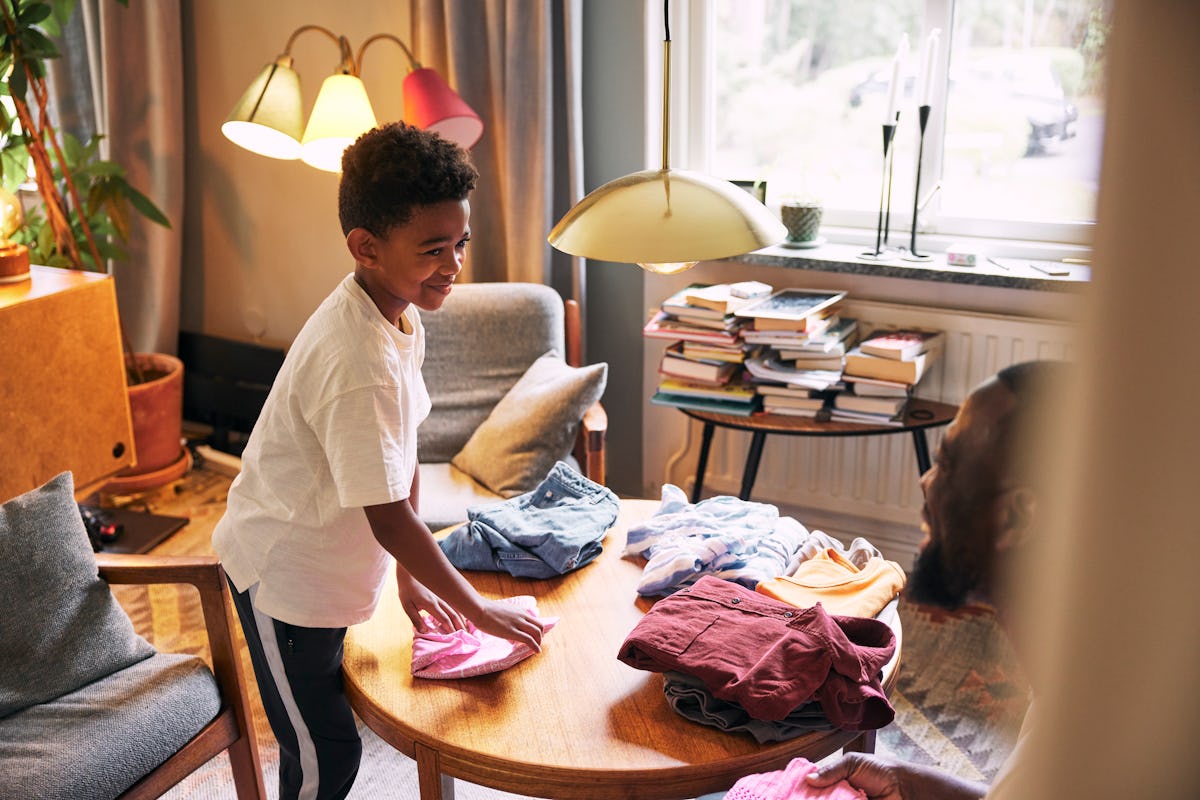
A parent on Reddit posted recently about their almost-9-year-old daughter, who handles a short weekly chore list to earn her allowance. Dog poop pickup in the yard. Unloading the dishwasher. Keeping her room tidy. Hauling in the trash cans. Four tasks. Not unreasonable.
The daughter, however, had a different read on the situation. She claimed to be the only child in her 400-plus-student school required to do any of it.
“She tells me she is the only kid in her whole school that has chores,” the parent wrote. “I doubt her data is that complete, however when I talk about chores with other parents, they always say stuff like, ‘Oh, I guess I should give my kids chores.’”
That offhand “Oh, I probably should,” is the line that lands.
It’s not a parenting failure. It’s an honest snapshot of how structured responsibility actually gets built in family life, which is rarely on a clean, uninterrupted schedule. You don’t hand a 5-year-old a laminated chore chart and never revisit the subject again. You’re consistent for 3 months, you lose the thread when soccer season starts, you spend 6 weeks unloading the dishwasher yourself while your kids are watching videos in the next room, and then you reset. That’s just how it goes for most families.
Doesn’t mean responsibility isn’t being taught. Means family life is genuinely complicated.
The discussion that followed the original Reddit post confirmed what the parent was looking for. Dozens of commenters came in with their own setups, and most reported that chores are still very much a working part of their households. “My kids get their first chores at about 2 to 3, they pick up toys and match socks,” one commenter said. “I think chores are a totally normal thing.”
Another commenter had something pointed to say about the daughter’s claims. “I used to say this stuff all the time as a child to get my parents to cave. Good for holding her to responsibility. She will become a hard worker with less entitlement. Don’t compare yourself to other families unless something isn’t working.”
Smart kid, honestly. Classic negotiating move. She identified the exact pressure point and went straight at it.
Part of what makes this conversation worth having isn’t the chore list itself. It’s the distinction between chores as a structured system and responsibility as a general expectation in the house. Some families use a tight chart with assigned days and specific dollar amounts tied to each completed task. Others don’t bother with formality but expect everyone to pitch in before dinner or before screens come on. Both approaches, when followed with any consistency, can produce kids who actually know how to carry their weight. The American Academy of Pediatrics has pointed out for years that age-appropriate responsibilities help children develop confidence and a genuine sense of belonging in the family unit, not simply obedience.
Starting early matters more than most parents think. The University of Minnesota Extension recommends that children as young as 2 or 3 can begin participating in simple household tasks, building a habit of contribution that’s much harder to introduce cold at age 9 when a kid has already learned the house runs fine without her input.
Picking up toys. Matching socks. That’s the entry point.
None of this means every family needs a formal program with weekly reviews and a posted schedule on the refrigerator. Plenty of households run on looser expectations and still raise self-sufficient people. What seems to matter more than the specific method is the underlying message that everyone in the family has a role, and that role isn’t optional.
The Reddit parent wasn’t looking for validation that their system is perfect. They were checking whether they’d drifted out of step with other families. What they found instead was confirmation that the drift is nearly universal, and that the families doing it consistently don’t brag about it at soccer practice, which is partly why the daughter’s survey data came back so skewed.
She’s almost 9. She’ll survive the chores.