2-Ingredient Carpet Deodorizer That Works Like a Hotel
A simple mix of baking soda and essential oils can neutralize carpet odors in 15 minutes. Here's how this easy DIY trick actually works.
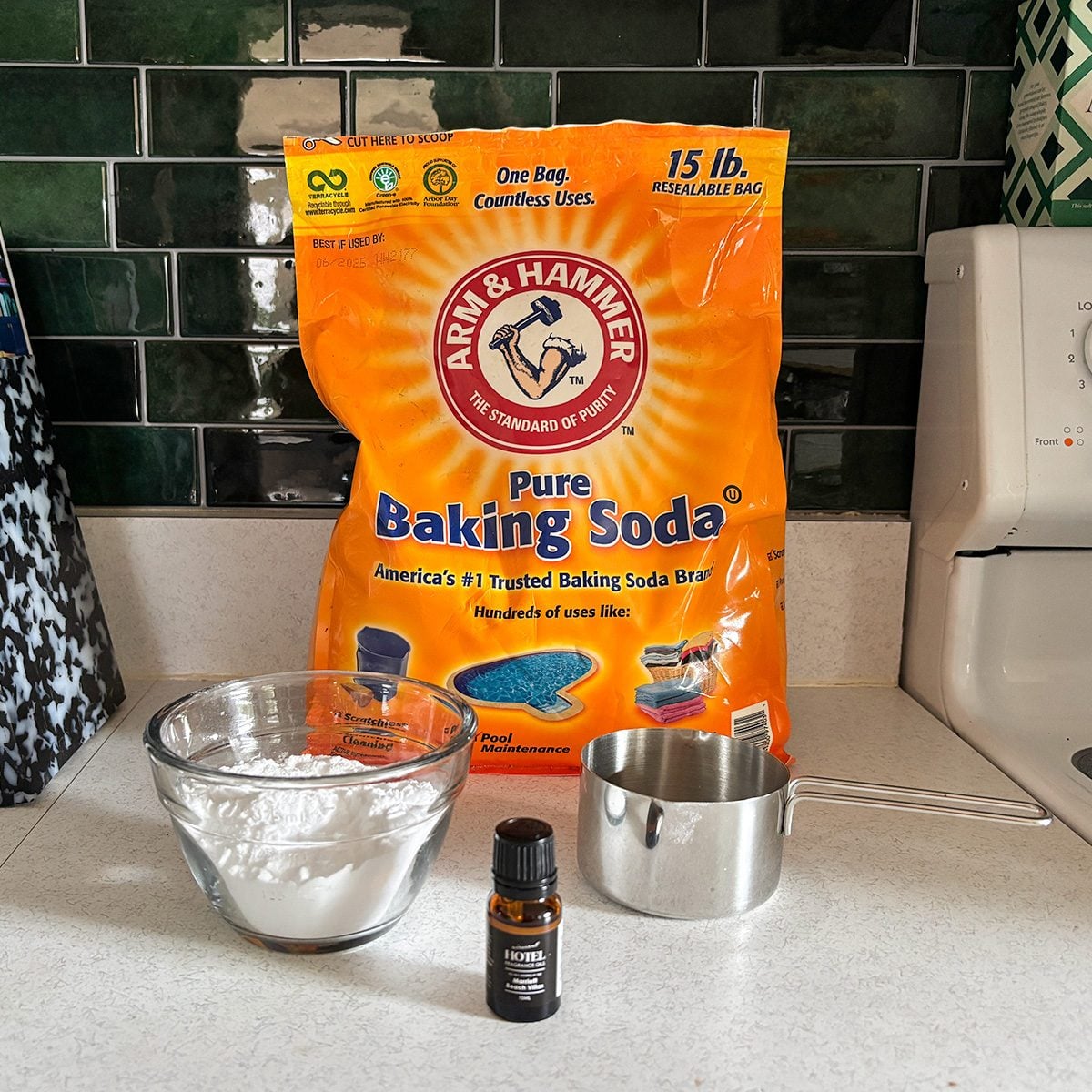
Baking soda costs about $1 at any grocery store. Essential oils run $5 to $10 for a small bottle. That’s your whole supply list for a carpet deodorizer that actually works, and it takes about 20 minutes start to finish.
Carpet replacement quotes start around $1,500 for a decent-sized suburban living room and climb fast from there. So when a two-ingredient fix can knock out pet smells, tracked-in mud funk, and the general mystery odor that builds up over a school year, it’s worth knowing how to do it right.
Here’s the method. Combine one cup of baking soda with 10 to 20 drops of essential oil in a small bowl. Use a fork to work out the clumps until the mixture looks dry and even. Sprinkle it across the carpet, covering high-traffic areas first. The spots where your dog sleeps, the path between the couch and the kitchen, the corner the kids claim every Saturday morning. Let it sit for at least 15 minutes, then vacuum it up. That’s the whole process.
The chemistry isn’t complicated, but it is satisfying. Cleaning expert Allen P. Rathey broke it down plainly: “Baking soda (alkaline) is attracted to human sweat, pet urine, and body oils (acidic) — which cause bacterial odor in carpet — and can neutralize them for a time,” he said. That’s not masking odor with a stronger smell. That’s a chemical reaction pulling the source of the stink out of the fiber.
Rathey didn’t stop there. “Odors may come from mold (also acidic) in carpeting, and baking soda is a chemical ‘match’ that may also help neutralize the odor,” he said. Anyone living in a humid climate, a basement apartment, or a house where the windows don’t get opened enough should pay attention to that one. Mold doesn’t need much to get going. Moisture, something organic to feed on, low light. Your carpet provides all three, Tuesday through Sunday, year-round.
For the essential oil, you’ve got real choices. Lemon is clean and sharp, cuts right through that stale-room smell. Bergamot is softer, closer to what you’d smell walking into a hotel lobby that costs more than you’d spend. Family Handyman recommends starting with 10 drops and working up from there, because some oils are concentrated enough that 20 drops turns your living room into something overwhelming. Start low. You can always add more next time.
Two things people get wrong on the first try.
Don’t skip the whisking. Clumps matter more than they seem like they should. A lump of baking soda that didn’t fully absorb the oil won’t spread into the carpet fibers. It’ll just sit on top looking like you knocked over a box of something. A regular fork handles this in about 30 seconds.
The sitting time is where most people undercut themselves. Fifteen minutes works. But if you can sprinkle the mixture down before you start making dinner and vacuum after you eat, that extra 45 minutes does something noticeably better, especially on carpet that’s been down for a few years and has had time to really hold onto odors. The baking soda needs contact time to do the neutralizing work Rathey described.
Cost comparison is worth spelling out. A name-brand carpet deodorizing powder at any big-box store runs $10 to $15 for a container that won’t last you the season. This recipe, made from a $1 box of baking soda and a few drops of a $5 essential oil, costs less than 50 cents per treatment. Replacing carpet is a $1,500 to $3,000 project that suburban homeowners push off for years because the timing is never right. That’s exactly the window where this kind of regular maintenance matters most.
Any vacuum that works well enough to clean your carpet normally will handle baking soda pickup without any trouble. No attachments, no special settings. Just run it over the treated area the same way you would on a regular cleaning pass.
Good carpets held onto with cheap maintenance beats new carpet purchased out of desperation.