How Pollen Damages Your Car and How to Stop It
Pollen does more than look messy—it scratches paint, clogs filters, and cuts fuel efficiency. Here's how to protect your car this spring.
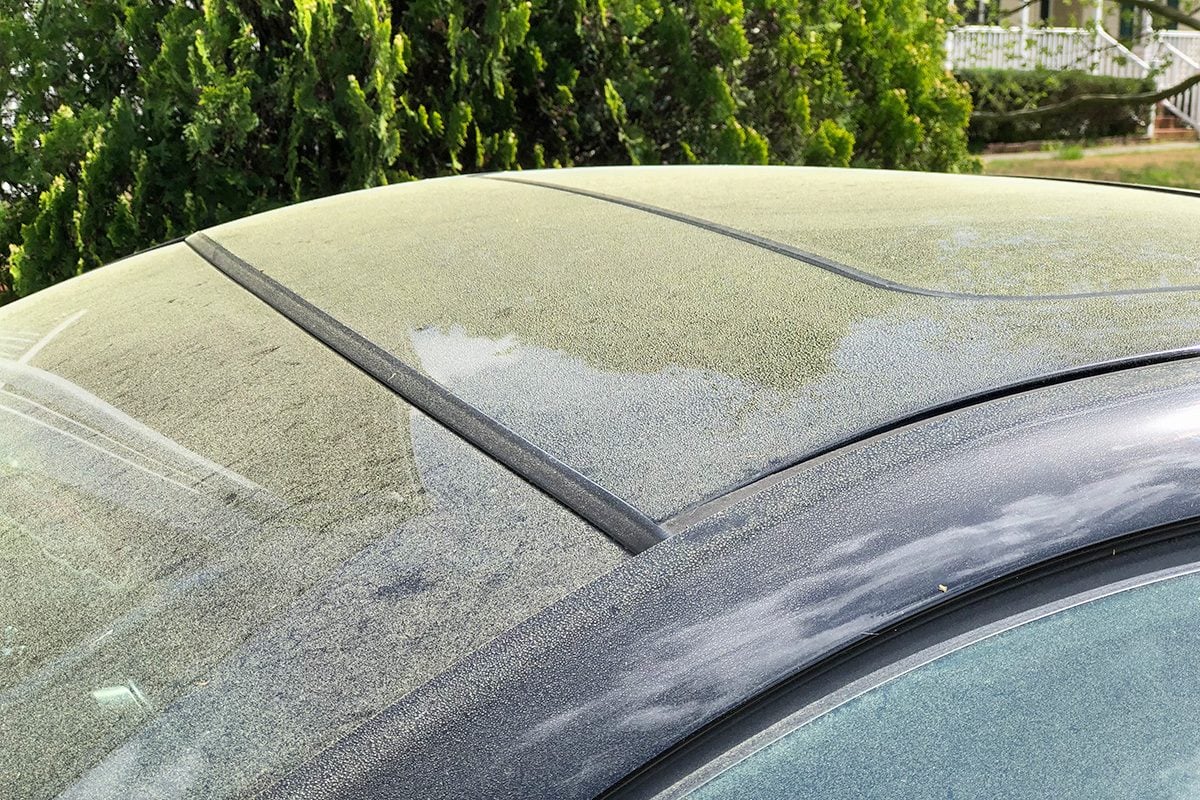
Pollen levels across much of the Midwest hit record highs in spring 2025, and if your car sat outside during any of it, there’s a decent chance the damage is already done.
That yellow-green film isn’t just ugly. It scratches paint. It chokes filters. It tanks fuel economy. And it turns the air inside your cabin into something you don’t want to breathe for 45 minutes during a commute. None of this has to happen if you know what you’re dealing with.
Lucas Waldenback, a driver education expert, says the problem is that most people don’t take pollen seriously until it’s too late. “Pollen season tends to catch drivers off guard because it doesn’t feel as urgent as winter hazards like ice or salt,” Waldenback told Family Handyman. He’s seen it play out the same way year after year: drivers who winterize obsessively then let weeks of pollen accumulation go unchecked until they’re looking at dull paint and a sluggish engine.
Here’s the instinct you need to kill immediately. When you see a yellow-coated car, the temptation is to grab a rag and wipe it off. Don’t. Automotive specialist Matt Clamp put it plainly: “It may seem soft to touch, but under a microscope, pollen actually has a spiky surface, and this can act like fine sandpaper,” Clamp said. Those microscopic spikes drag across your clear coat with every dry wipe, leaving scratches that compound over weeks. Wet pollen is worse. It turns acidic on contact with moisture and starts corroding your finish from the outside in. The car that looks like it just needs a rinse might actually be losing clear coat while it sits in your driveway.
Your engine and cabin filters take a hit, too. Automotive expert Steve Haney focuses on what happens under the hood when filters get packed with particulate. “Over time, that can reduce fuel efficiency and lead to engine damage,” Haney said. If your gas mileage has quietly dropped or the car’s been feeling less responsive than usual, a clogged engine air filter is a likely suspect, not a vague mechanical issue you need to spend $400 diagnosing. You can check air filter replacement schedules by vehicle type at the Car Care Council to find out whether your vehicle is overdue.
Before pollen counts peak, it’s worth knowing what you’re actually up against in your specific area. You can check local pollen counts through the American Academy of Allergy, Asthma and Immunology by zip code, and the Environmental Protection Agency’s outdoor air quality index shows how bad the air is on any given day. Both are free. Neither takes more than 90 seconds to check.
Start with your filters. Replace both the cabin and engine air filters at the beginning of heavy pollen season, then pull them out and inspect them every few weeks. Car protection specialist Ken Huening is direct about wash frequency during peak weeks: two or three times a week isn’t overkill, it’s math. “This is a good time to sign up for the unlimited wash level at your local car wash,” he said. Run the numbers on your local car wash’s pricing and you’ll find that a monthly unlimited membership usually breaks even after four or five visits. During peak weeks, you’ll hit that threshold in 10 days.
When you wash at home, use pH-balanced shampoo and a soft sponge. Rinse thoroughly before you touch the surface with anything. Dry wipes are out entirely.
Clamp’s other recommendation is applying a ceramic coating or wax before pollen season hits its stride. “This can make it harder for the pollen to stick, and will make it easier to wash off next time,” he said. A good ceramic coating can last months. It doesn’t stop pollen from landing on your car, but it changes the relationship between the pollen and your paint surface dramatically.
The season doesn’t care whether you’re ready. High-count days can show up in March and run into June, depending on what’s blooming near you. Keeping tabs on your local air quality through the EPA index takes less time than scrubbing swirl marks out of neglected clear coat.
“Over time, that can reduce fuel efficiency and lead to engine damage,” Haney said. Worth taking seriously.